
How to Prepare for a Successful DFM Review

A Design for Manufacturing review can save a product from late redesigns, tooling delays, and avoidable cost. It can also become a frustrating round of opinions if the team arrives without the right information.
The best DFM review is practical. It connects design intent with real manufacturing limits. It gives engineers, suppliers, quality teams, and production teams a shared view of what needs to change before drawings are released, molds are cut, fixtures are built, or parts are ordered at scale.
Use this checklist to prepare before the review, guide the discussion during it, and leave with decisions that are clear enough to act on.

Start with a clear goal for the review
A DFM review should answer a specific question. If the goal is too broad, the review will drift.
Before inviting people or sharing files, define the review stage and what decisions need to come out of it. A concept-stage review should focus on major manufacturing risks. A pre-release review should focus on exact dimensions, tolerances, materials, inspection plans, and supplier readiness.
Common goals include:
Reducing part cost before release Identify features that need unnecessary machining time, special tooling, or expensive secondary operations.
Confirming process fit Check whether the part geometry suits machining, injection molding, sheet metal forming, die casting, additive manufacturing, or assembly.
Avoiding tooling rework Catch draft, wall thickness, shutoff, parting line, and shrink concerns before hard tooling begins.
Improving production yield Find dimensions, finishes, or assembly steps that could create scrap or inconsistent output.
Preparing for supplier quoting Make sure the supplier has the data needed to quote accurately instead of padding the price for uncertainty.
Write the goal in one or two sentences. Put it at the top of the review packet. That simple step helps keep every comment tied to the same outcome.
Bring the right design inputs
A successful review depends on complete data. If the manufacturing team has to guess, the feedback will be weaker and less reliable.
At minimum, prepare a current release package. If the design is not fully released, mark it clearly as preliminary and note what is still changing.
Include:
3D CAD files Share native files when possible, plus neutral formats such as STEP for suppliers or reviewers who use different CAD systems.
2D drawings Include dimensions, tolerances, datums, notes, surface finish requirements, material callouts, and revision history.
Key functional requirements Explain what the part must do, where it interfaces, what loads it sees, and which dimensions affect performance.
Expected production volume Manufacturing choices change when a part moves from prototypes to thousands or millions of units.
Target cost if available A supplier cannot suggest practical tradeoffs without knowing whether cost pressure is mild or severe.
Schedule constraints Note deadlines for prototypes, tooling, validation builds, and production release.
Known risks and open questions Do not hide uncertainty. The review is the right place to work through it.
Also include photos or samples of related parts if they exist. A real sample can reveal assembly access, handling needs, and inspection issues that drawings alone may miss.
Align the design with the manufacturing process
DFM feedback depends heavily on the chosen process. A feature that is easy in CNC machining may be difficult in injection molding. A bend that works in one sheet metal thickness may crack in another. A sharp internal corner may be simple in a 3D printed prototype but expensive to machine.
Start the review by confirming the preferred process and any backup process. Then test the design against process limits.
Manufacturing process | What to check before the review | Common late-stage issue |
CNC machining | Tool access, internal radii, setup count, material stock size | Tight corners or deep pockets that need special tools |
Injection molding | Draft, wall thickness, ribs, bosses, gates, parting lines | Sink marks, warp, or tool complexity |
Sheet metal | Bend radii, hole-to-edge distance, grain direction, flat pattern | Features too close to bends |
Die casting | Draft, material flow, wall transitions, ejector locations | Porosity or weak fill areas |
Additive manufacturing | Build orientation, support removal, surface finish, post-processing | Prototype geometry that does not scale to production |
This is where early supplier input matters. Internal teams may understand design intent better, but suppliers often understand the daily limits of the process better. A short comment from the shop floor or toolmaker can prevent weeks of rework later.
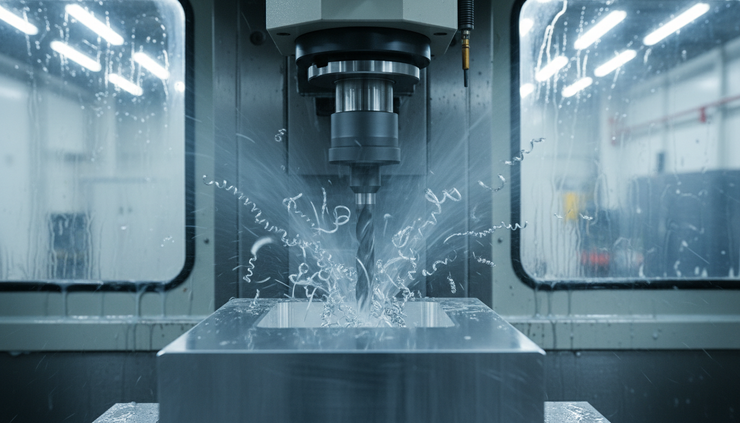
Review tolerances with discipline
Tolerances are one of the fastest ways to raise cost without improving function. A tight tolerance may require slower machining, extra inspection, special fixtures, tighter environmental control, or lower yield.
Before the DFM session, sort tolerances into three groups:
Tolerance type | Review question | Preparation step |
Function-critical | Does the product fail if this dimension varies? | Link the tolerance to a requirement, test, or interface |
Assembly-critical | Does this affect fit, alignment, or clearance? | Confirm stack-up and mating part variation |
Non-critical | Is this tighter than the process normally holds? | Open the tolerance if function allows it |
A good rule is simple. If no one can explain why a tight tolerance exists, it deserves review.
Pay special attention to:
Datums that do not match how the part will be held or inspected
Overly tight flatness or parallelism on non-sealing surfaces
Cosmetic requirements applied to hidden areas
Dimensions that conflict with natural process variation
Tolerances copied from older drawings without review
Do not treat tolerance changes as small edits. They can affect performance, inspection, suppliers, and assembly. Track each change and confirm that the right person approves it.
Check material and finish choices early
Material selection affects cost, availability, tooling, cycle time, part strength, compliance, and finish. Saving this discussion until the end can cause painful redesign work.
Prepare the material callout and list acceptable alternatives. If only one material can work, explain why. If equivalents are acceptable, say so clearly.
For plastics, review:
Resin grade and availability
Shrink rate assumptions
UV, heat, chemical, and impact needs
Color and texture requirements
Regrind limits if applicable
For metals, review:
Alloy and temper
Stock form and availability
Heat treatment needs
Corrosion resistance
Plating, anodizing, passivation, or coating requirements
Finishes deserve the same attention. A finish may look like a simple note on a drawing, but it can drive masking, racking, surface preparation, inspection, and scrap.
Be clear about what the finish must achieve. Is it cosmetic, protective, conductive, low-friction, food-safe, cleanable, or wear-resistant? The answer changes both process selection and inspection.
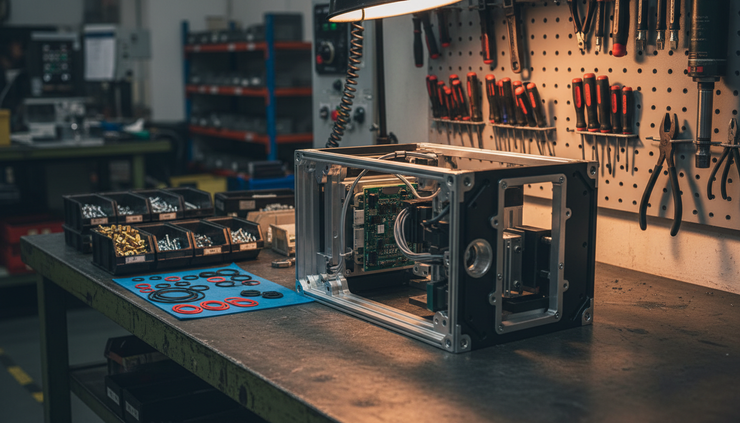
Prepare an assembly view, not just a part view
Many manufacturability problems are really assembly problems. A part may be easy to make but difficult to install, align, fasten, test, or service.
Bring an assembly model to the review. Show adjacent parts, fasteners, adhesives, seals, inserts, harnesses, and tools used during assembly. If the product has a defined build order, include it.
Look for issues such as:
Hidden fasteners with poor tool access
Parts that can be installed in the wrong orientation
Tight clearances that cause scratches or binding
Features that make fixturing difficult
Adhesive or sealant paths that are hard to control
Components that require too many hands to hold in place
Inspection points that become inaccessible after assembly
A strong DFM review should also support Design for Assembly. Fewer parts, clearer alignment, and simpler fastening can lower cost while improving quality.
Invite people who can answer real questions
The best review group is small enough to make progress and broad enough to catch risk. Avoid turning the session into a large audience event. Invite people who own design, production, quality, purchasing, and supplier feedback.
Useful participants include:
Product or mechanical engineer
Manufacturing engineer
Quality engineer or inspector
Supplier engineer or toolmaker
Assembly lead or production technician
Buyer or sourcing contact when cost and lead time matter
Project owner who can make tradeoff decisions
Give reviewers the packet early enough to prepare. A rushed first look during the session leads to surface-level comments. Ask each reviewer to come with specific concerns, not general opinions.
For suppliers, define what kind of feedback you want. Ask about tool access, cycle time, likely scrap drivers, inspection burden, material concerns, and cost drivers. A vague request for “any feedback” often produces vague answers.
Use a checklist during the review
A checklist keeps the review grounded. It also helps newer engineers learn what experienced manufacturers look for.
Use the list below as a starting point, then adjust it for your process.
Part geometry
Are wall thicknesses consistent where the process needs them to be?
Are internal corners compatible with available tools?
Can all features be reached without extra setups?
Are draft angles sufficient for molded or cast parts?
Are ribs, bosses, and holes sized for the process?
Are there sharp edges that need breaks or radii?
Tooling and fixturing
Can the part be held repeatably during manufacturing?
Are datum surfaces practical for fixturing?
Will clamps or fixtures damage cosmetic surfaces?
Does the design require custom tooling that affects cost or schedule?
Can the same fixture support inspection?
Quality and inspection
Are critical dimensions clearly identified?
Can inspectors measure the part with standard tools?
Are gauge requirements known?
Do drawing notes match the inspection plan?
Are cosmetic standards objective enough to enforce?
Cost and lead time
Which features drive the most cost?
Which requirements create the longest lead time?
Can a design change reduce setups, tools, or secondary operations?
Are material choices easy to source?
Does the design support the expected production volume?
Reliability and field use
Are stress concentrations reduced where loads are high?
Are wear surfaces specified correctly?
Are seals, coatings, or joints suitable for the environment?
Could manufacturing variation reduce product life?
Are service or repair operations practical if needed?
Do not rush through every item with equal weight. Spend time where the risk is highest.
Capture decisions, owners, and timing
A DFM review only creates value if the team leaves with clear next steps. Notes that say “review tolerance” or “check with supplier” are too weak. They do not say what must happen, who owns it, or when it needs to be done.
For each issue, capture:
The concern Describe the manufacturing or quality risk in plain language.
The affected feature Reference the part number, drawing zone, CAD feature, or requirement.
The proposed change State the specific geometry, tolerance, material, note, or process change under review.
The owner Assign one person to resolve the item.
The due date Tie the date to the project schedule.
The decision status Mark it as open, approved, rejected, or waiting on data.
A simple action log is enough. The key is consistency. Review the action list within a day or two while the discussion is still fresh. Update the CAD and drawings only after decisions are approved.

Common mistakes that weaken a DFM review
Even experienced teams can miss the point of a review when schedule pressure builds. Watch for these traps.
Reviewing too late
If tooling has started or purchase orders are placed, feedback becomes harder to accept. Hold the first review while meaningful design choices are still open.
Focusing only on the part model
A clean model can still be hard to build. Always include drawings, requirements, materials, finishes, and assembly context.
Treating supplier feedback as optional
Suppliers know which features will slow production, raise cost, or create scrap. Bring them in before release when possible.
Leaving cost out of the conversation
Manufacturing cost is part of design performance. Make tradeoffs visible instead of letting them appear during quoting.
Failing to close the loop
A review that produces comments but no confirmed changes adds noise. Track actions until each one is resolved.
What a successful review looks like
A strong review does not need to eliminate every risk. It should make the major risks visible and manageable.
By the end, the team should have:
A shared understanding of the manufacturing process
Confirmed critical features and tolerances
Clear material and finish requirements
Identified cost and lead-time drivers
Supplier concerns documented
Approved changes or assigned follow-up actions
A release package that is easier to quote, build, inspect, and scale
The real value of a Design for Manufacturing review is not the meeting itself. It is the decisions made while change is still cheap. Prepare the packet, ask specific questions, invite the people who know the process, and track every open item to closure. That is how a DFM review helps prevent costly changes later and gives the product a better path into production.


Comments