
Smarter Consumer Devices in 2024: Key Hardware Trends Shaping Product Development

Connected hardware has moved past the novelty phase. A device that simply pairs with an app no longer feels smart. In 2024, consumers expect products to sense context, respond quickly, protect personal data, last longer, and work with the devices they already own.
That shift changes how teams design products. The hard part is no longer adding a radio module and a mobile app. The hard part is deciding what intelligence belongs on the device, what belongs in the cloud, how much data the product should collect, and how to make the whole experience feel simple.
The rise of smarter consumer devices is also changing the order of product decisions. Hardware, firmware, industrial design, data policy, connectivity, and customer support now need to be planned together. A weak choice in one area can shape the whole product lifecycle.

Smart devices are becoming more context aware
The biggest change in consumer hardware is the move from command-based products to context-aware products.
Older connected devices waited for a tap, voice command, or schedule. Newer devices use sensors, on-device processing, and software models to infer what is happening. A thermostat can respond to occupancy. Earbuds can change sound settings based on noise around the user. A camera can distinguish between a person, a pet, and passing motion.
This makes products feel more useful, but it also raises the bar for product design. Context awareness requires more than adding sensors. Teams need to answer practical questions early:
What should the product sense?
What should happen automatically?
When should the user stay in control?
What mistakes would feel annoying, unsafe, or invasive?
How will the user know why the device acted?
The best smart behavior feels calm. It removes small steps without surprising people. A light that turns on gently when someone enters a hallway at night feels helpful. A device that changes settings without explanation can feel broken, even if the logic behind it makes sense.
For product development, this means teams need to design feedback loops. A smarter device should show what it detected and let users correct it. Those corrections can improve future behavior, but they also build trust.
Edge intelligence is changing what hardware needs to do
More intelligence is moving onto the device itself. This is often called edge AI, though the practical meaning is simple: the product can process some data locally instead of sending everything to a remote server.
That matters for three reasons.
First, local processing can make devices faster. A wake word, gesture, or simple image classification can happen with little delay. That makes the product feel more responsive.
Second, local processing can reduce cloud costs. A device that filters data before sending it can avoid constant uploads.
Third, local processing can support privacy. If raw audio, images, or motion data stay on the device, the product can offer useful features while collecting less personal information.
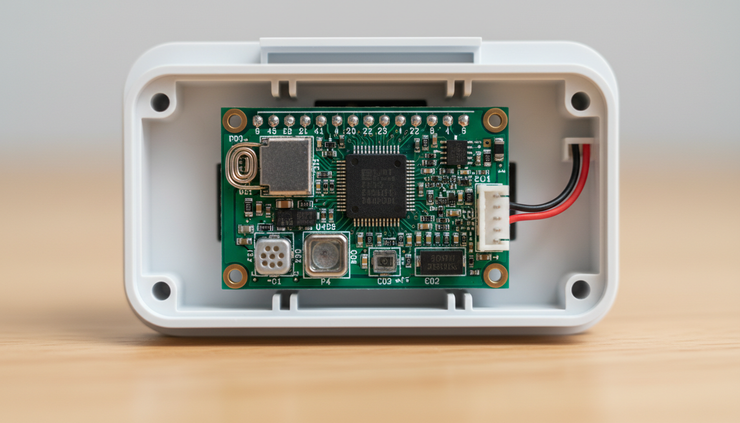
The tradeoff is complexity. Edge intelligence affects chip selection, memory, power draw, heat, and firmware updates. A product team cannot treat the machine learning model as a late-stage feature. It shapes the bill of materials and the enclosure.
A small battery device may need a low-power microcontroller with a tiny model. A plugged-in home device may support a more capable processor. A wearable may need dedicated sensor processing to protect battery life.
The key development question is not “Can we add AI?” It is where should intelligence live?
A useful split might look like this:
Product decision | Common direction in 2024 |
Fast responses | Handle locally when possible |
Sensitive raw data | Keep on device when the feature allows |
Heavy model training | Handle in the cloud or during development |
Personal settings | Sync carefully across devices |
Firmware and model fixes | Plan for secure over-the-air updates |
This split is now a core product architecture choice, not a feature detail.
Interoperability is becoming a product requirement
Consumers do not want every device to live in its own small world. They want products that work with common home platforms, phones, voice assistants, and accessories.
That has made interoperability a major hardware trend. Standards and wireless protocols such as Matter, Thread, Bluetooth Low Energy, Wi-Fi, and ultra-wideband are shaping how consumer devices connect and behave.
This does not mean every product needs every protocol. It means teams need a clear connectivity strategy before hardware is locked.
A battery-powered door sensor has different needs from a video doorbell. A wearable has different needs from a countertop appliance. A tracker that needs close-range location has different needs from a speaker that streams media all day.
Good product planning starts with everyday use:
Where will the device live?
How often does it need to send data?
Does it need low latency?
Will it run on battery?
Does it need to work when the internet is down?
What platforms do buyers expect it to support?
Interoperability also affects onboarding. A great device can lose people during setup. If pairing fails, Wi-Fi passwords are painful, or the device requires too many permissions, the first impression suffers.
In 2024, connection quality is part of product quality. Consumers may not know which protocol a device uses, but they notice when setup is quick, response is fast, and the product works with the rest of the home.
Sensors are becoming the real interface
Screens and apps still matter, but sensors are taking on more of the interface role. Many smart products now learn from motion, touch, sound, light, temperature, air quality, pressure, location, and usage patterns.
This is especially clear in wearables and home devices. A ring can track movement and rest patterns. A thermostat can combine temperature, occupancy, and weather data. A smart appliance can detect how often it is used and suggest maintenance.
The value comes from sensor fusion, which means combining signals to understand context better than any single sensor could.
For example, motion alone may not tell a smart light what is happening. Motion plus time of day plus ambient light can lead to a better response. A wearable can combine movement, heart rate signals, and sleep timing to provide more useful trends than a step count alone.
Still, more sensors do not always mean a better product. Each sensor adds cost, calibration needs, software work, and possible failure modes. Sensors also create privacy expectations. A camera in a living room feels different from a temperature sensor on a wall.
Strong product teams ask whether a sensor is needed to create clear value. If the answer is weak, the product may be better without it.
A sensor should earn its place in the design. It should improve the experience, help the device make better decisions, or support maintenance in a way users understand.

Battery life is still a design feature
Smart products fail when they demand too much attention. A device that needs frequent charging, battery changes, or troubleshooting can feel less smart than the product it replaced.
Battery life remains one of the most important parts of consumer hardware design, especially as products add sensors and local processing. Every feature competes for power. Radios, displays, motors, microphones, processors, and LEDs all draw from the same budget.
This forces teams to make practical choices.
A wearable may need to reduce screen use and process sensor data in short bursts. A smart lock needs enough reserve power to work reliably. A tracker may need a long sleep mode. A connected appliance can run on wall power, but still needs careful thermal and safety planning.
Consumers often judge battery life through convenience, not specs. They care whether a device fits into their routine. Charging a smartwatch while showering may feel easy. Charging a sleep tracker every morning may feel annoying. Replacing a coin cell once a year may be acceptable. Replacing one every month may not.
Power management should be part of the product concept from the start. It affects the enclosure, display, firmware, mobile app, notifications, and even packaging. If the battery is rechargeable, the charging method matters. If it is replaceable, the process should be clear and simple.
USB-C has also changed expectations. Many buyers now prefer one common charging cable across devices. That does not fit every product, but it is hard to ignore for devices that need regular charging.
Privacy and security now shape the buying decision
Smarter devices often live in sensitive places: homes, bedrooms, cars, kitchens, and on the body. They may collect voice, location, movement, health-related signals, video, or presence data. That makes privacy and security part of the product experience.
Security can no longer be treated as a final checklist. Connected devices need protections from the beginning, including:
Secure boot
Encrypted communication
Safe credential storage
Signed firmware updates
Clear permission controls
Data minimization
A plan for vulnerability fixes
The user-facing side matters too. People need to understand what the product collects, why it collects it, and how to change settings. Long privacy policies alone do not solve this. The device and app should explain key choices in plain language.
A product that respects privacy can build trust. A product that surprises people with unclear data use can damage trust fast.
Data minimization is especially useful. If a device can provide a feature without storing raw data, that is often the stronger design. If cloud storage is needed, teams should define how long data is kept and how users can delete it.
Security also affects product lifespan. A connected device needs software support after launch. If a company cannot maintain updates, cloud services, or security patches, the product may become a risk or lose key features.
That makes long-term support a business decision, not only an engineering task.
Repairability and durability are moving closer to the center
Consumers are paying more attention to how long devices last. Regulators are also showing more interest in repair access, battery replacement, and electronic waste. This puts pressure on product teams to think beyond launch day.
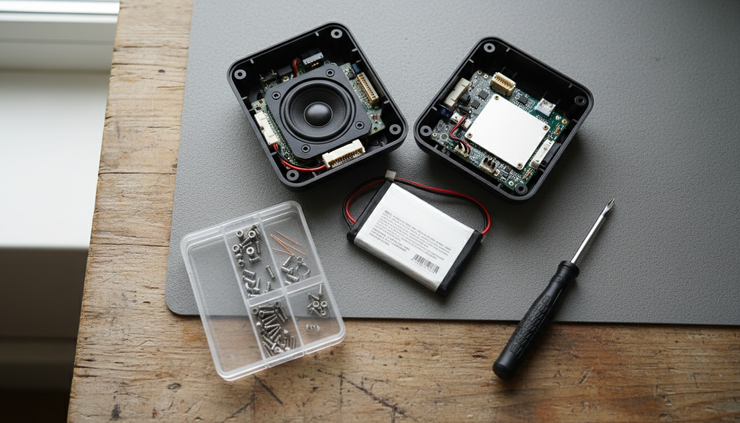
A sealed product can look clean and feel premium, but it may be hard to repair. A glued-in battery can make service difficult. A device that depends on a cloud service can lose value if that service ends.
Durability now includes physical design, software support, and parts availability.
For consumer hardware teams, the design challenge is balance. A waterproof wearable may need tight sealing. A low-cost sensor may not support full repair. But many products can still improve through better fasteners, clearer battery access, modular parts, and honest end-of-life planning.
Repairability can also reduce support costs. If a common part can be replaced safely, a customer may keep the product longer. If the whole device must be replaced for a small failure, frustration grows.
A longer product life can become a strong selling point, as long as the promise is real.
Subscriptions need to prove their value
Many consumer devices now connect hardware to recurring software services. This can make sense. Cloud storage, advanced detection, home monitoring, extended analytics, and content services all cost money to run.
At the same time, subscription fatigue is real. Buyers are wary of devices that hide basic features behind monthly fees or become less useful without a plan.
The best recurring services add clear value after purchase. They may provide richer history, better automation, family features, backup storage, or advanced alerts. The core product should still feel complete without forcing every user into a plan.
This matters during product development because service design affects hardware design. If a camera offers local storage, it may need memory support. If a wearable offers advanced trend analysis, it needs reliable sensor data. If a smart home device promises offline control, it needs local processing and thoughtful network behavior.
A recurring service cannot rescue weak hardware. It works best when the device is already useful and the service adds depth.
Product teams need to design the whole lifecycle
The core lesson of smarter consumer devices in 2024 is that hardware products are no longer finished at shipment. They are updated, connected, supported, secured, repaired, and judged over time.
That means product teams need to plan the lifecycle early.
A strong development plan includes:
A clear reason for every connected feature
A privacy model before data collection begins
A power budget tied to real routines
A connectivity plan based on where the device will live
An update system that is secure and understandable
A support plan for years, not weeks
A realistic end-of-life path if services change
This does not mean every product needs more technology. Some of the best consumer devices in the next few years will be smarter because they are more restrained. They will sense only what they need, process data in the right place, connect without friction, and explain themselves clearly.
The winning hardware will feel less like a gadget and more like a dependable part of daily life. That is the real direction for connected consumer product development in 2024 and beyond.


Comments